
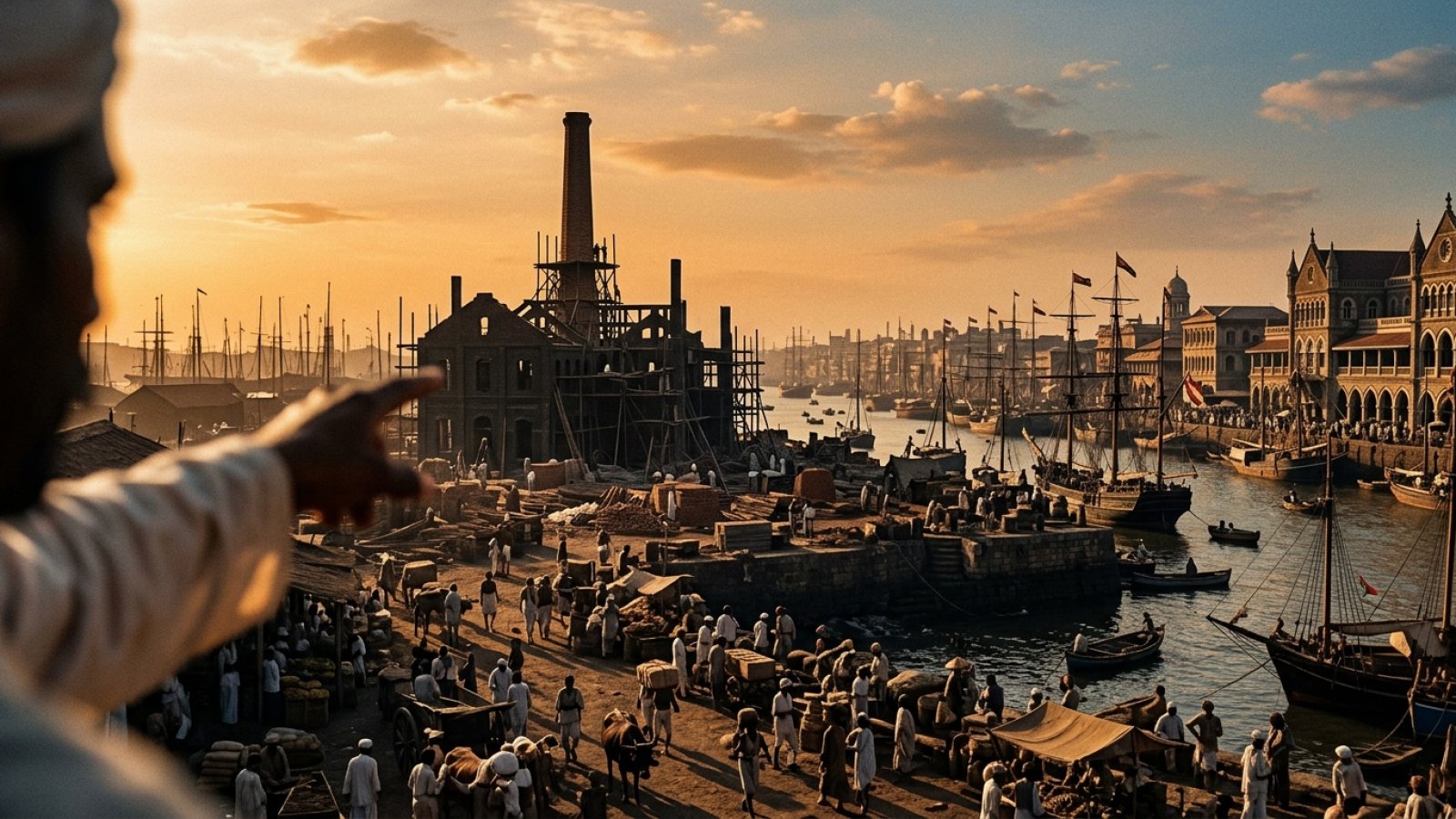
In the vibrant, sprawling port city of Bombay in the late 19th century, a young man named Jamsetji Nusserwanji Tata observed the colonial economic landscape and envisioned a radically different future for India. Born in 1839 in Navsari, Gujarat, Tata came from a family of Parsi merchant priests. He joined his father’s export trading firm at the age of 17, learning the intricacies of commodity markets, opium, and textiles that flowed between India, China, and Europe. This early exposure to global commerce, however, merely stoked a deeper ambition: to build an industrial base for a nation then under British rule, a self-reliance he knew was essential for its prosperity.
From Trade to Textile Power
Tata’s entrepreneurial journey truly began in 1868 when, after a stint in banking and managing his family’s overseas operations, he established a trading company with just 21,000 rupees. His real turning point came in 1869, when he acquired a defunct oil mill in Chinchpokli, Bombay. Rather than continuing with oil, he converted it into a cotton mill, the Alexandra Mill, which he sold two years later for a significant profit. This early success funded his most ambitious textile venture: the Empress Mill, founded in 1877 in Nagpur, a region rich in cotton but lacking modern industry. Tata meticulously planned the mill, installing state-of-the-art machinery from England, focusing on worker welfare, and ensuring competitive production. He risked significant capital and reputation on this distant industrial outpost, betting on quality and efficiency to challenge established British manufacturers.
A Blueprint for National Industry
Yet, Tata’s vision extended far beyond textiles. He recognised that for India to truly prosper, it needed heavy industry: steel for infrastructure, hydroelectric power to fuel factories, and world-class scientific education to drive innovation. These were monumental, almost fantastical, ideas for a colonial India that largely served as a raw material supplier for the British Empire. He traveled extensively, studying steel plants in Pittsburgh and power projects at Niagara Falls. He sought expertise from European and American metallurgists and engineers, often facing skepticism and outright dismissal from British officials who saw his ambitions as unrealistic and even threatening to their economic dominance. Locating the right iron ore and coal deposits for a steel plant became an obsession, leading to years of relentless geological surveys in vast, undeveloped regions.
These grand projects were not without their significant challenges and costs. The establishment of what would become the Tata Iron and Steel Company (TISCO) and the Tata Hydro-Electric Power Supply Company required unprecedented capital raising and overcoming immense logistical hurdles. It took years of painstaking effort to find suitable sites, secure land, and obtain the necessary clearances in a bureaucratic and often uncooperative colonial environment. His dream of a world-class research institution, which later became the Indian Institute of Science in Bengaluru, also met with resistance and took years of persistent advocacy and substantial personal donation to materialize. Tata poured not just his wealth, but his entire life’s energy into these ventures, often facing setbacks and disappointments that would have deterred lesser men.
The Enduring Pillars of Progress
Though Jamsetji Tata passed away in 1904, his sons and successors, Dorabji Tata and Ratan Tata, inherited his unyielding spirit and brought his grand designs to fruition. The majestic Taj Mahal Hotel opened in Bombay in 1903, a symbol of Indian pride and hospitality. Tata Steel began production in 1912 in a new industrial city, named Jamshedpur in his honor, revolutionizing India’s infrastructure capabilities. The first hydroelectric power plant began generating electricity in 1915, illuminating Bombay and powering its burgeoning industries. The Indian Institute of Science, established in 1909, began training generations of scientists and engineers, fulfilling Tata’s belief that scientific knowledge was the bedrock of national progress. What lasted was not just a collection of businesses, but a blueprint for a self-reliant, industrialized nation.
Jamsetji Tata’s life demonstrates the profound impact of a long-term, nation-building vision that transcends immediate profit. His story teaches that true innovation often requires the foresight to invest in foundational industries and education, even when the path is arduous and the immediate rewards are decades away.
